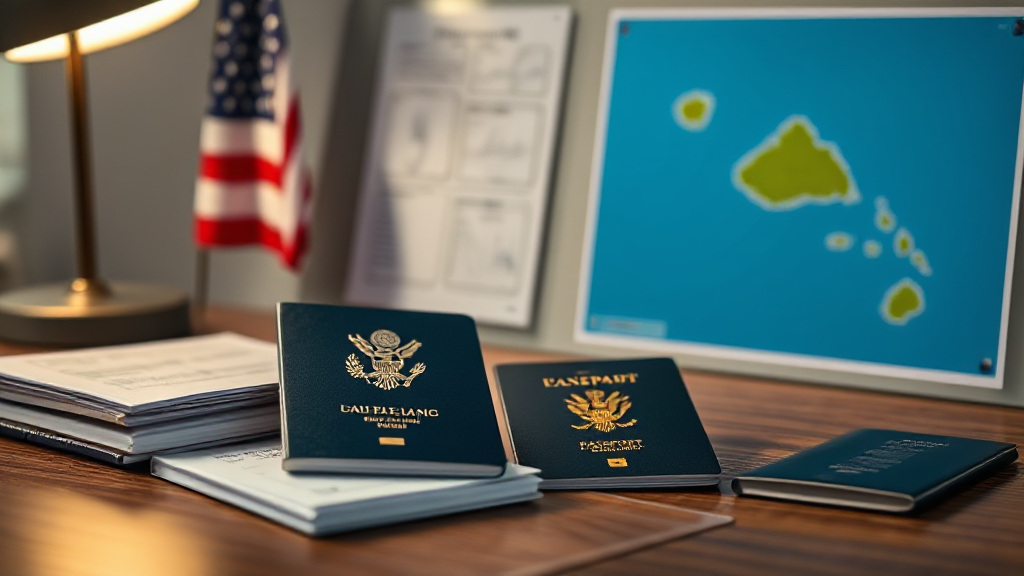
How Do I Actually Get Vanuatu Citizenship? 7 Steps I Follow From First Email to Passport
You have read the headlines about a second passport in the South Pacific, you have seen the price range quoted somewhere between six figures and “depends,” and now you are sitting at your desk wondering what the first move actually is. Not the concept. The move. Do you email a government office? Do you wire money somewhere? Do you hire a lawyer, an agent, or nobody at all? I work through this exact question with U.S. applicants regularly, and the honest answer is that the process is more orderly than most people expect, but only if you sequence it correctly. Get the order wrong and you either waste weeks or expose yourself to unnecessary risk. So here is the routine I actually follow, in the order I follow it, from the very first action to a passport in hand.
Step 1: Confirm You Are Actually Eligible Before You Spend Anything
Before any paperwork, before any consultation fee, I verify that the person in front of me fits the program. Vanuatu’s citizenship by investment route is built around a contribution to the national development fund, and it is designed for applicants who can document a clean background and a legitimate source of funds. If you have a criminal record, unresolved immigration issues in another country, or funds you cannot trace on paper, the application will not survive due diligence no matter how well it is packaged. I would rather tell someone this in the first ten minutes than take a fee and let them find out six weeks later.
The other early filter is family composition. The main applicant can typically include a spouse and dependent children, and the exact treatment of each family member affects both the cost and the document list. I ask for a simple family tree before anything else, because it determines the shape of the entire file. Understanding the full scope of Vanuatu Citizenship options at this stage saves people from discovering halfway through that a dependent they assumed was included actually requires a separate submission.
One more thing I check here: whether the applicant is a U.S. citizen, a green card holder, or neither. The document requirements differ, and U.S. applicants have a specific set of notarization and apostille steps that I build into the timeline from day one rather than bolting on later.
Step 2: Choose an Authorized Agent and Assemble the File in the Right Order
Vanuatu does not accept direct applications from individuals. You must go through an authorized agent, which is the single most important structural fact about this program. This is not a formality. The agent is the entity that submits your file, communicates with the citizenship commission, and is responsible for the accuracy of what goes in. Choosing the wrong one, or a middleman who is not actually authorized, is the most common way people lose money and time.
Once the agent is in place, I build the document file in a strict order, because some documents depend on others:
1. Passport copies and certified identity documents for every applicant, including dependents.
2. Police clearance certificates from every country where the applicant has lived for a meaningful period, typically the last ten years.
3. Proof of funds and source-of-wealth documentation, which is where most delays originate.
4. Medical certificates from a licensed physician.
5. Notarized and apostilled versions of everything that crosses a border.
The apostille step is the one U.S. applicants underestimate. Depending on your state, that can add one to three weeks, and it cannot be skipped or rushed by paying more. I start it early and in parallel with everything else rather than waiting for the file to be otherwise complete.
During this phase I also get the photographs and biometrics requirements confirmed in writing, because the specifications are precise and a rejected photo costs a full resubmission cycle. Small detail, real consequence.
Step 3: Submit, Survive Due Diligence, Take the Oath, and Collect the Passport
When the file is complete, the agent submits it and the clock starts. Due diligence is where the application is genuinely examined, and it is not a rubber stamp. Background checks run against international databases, and any inconsistency between what you declared and what the checks return will trigger questions. The way to pass this stage is boring: declare everything accurately the first time, including minor matters you might be tempted to leave out.
After approval in principle, the contribution is paid. I always confirm the payment channel in writing with the agent before any transfer, because the destination account is a fixed detail and any last-minute change to it is a red flag for fraud. Then comes the oath of allegiance, which for most applicants can be taken remotely or in person depending on current arrangements, and finally the certificate of citizenship and the passport itself.
Realistic timing from a complete file to passport is measured in months, not days, and I tell clients to plan around the slower end of any range they are quoted. If someone promises you a passport in a week, that is a signal to walk away, not a selling point.
Two practical notes I give every client at this stage. First, once you hold the passport, check your visa-free access against your actual travel plans rather than assuming it matches a marketing list, since agreements change. Second, and this matters for Americans specifically, dual citizenship is permitted by the United States, but it does not change your U.S. tax filing obligations. Vanuatu citizenship is not a tax strategy, and anyone selling it as one is selling something else. If your goal is genuine mobility and a second nationality, the program delivers that. If your goal is escaping the IRS, this is the wrong tool, and I say so plainly.
For U.S. applicants weighing the decision, the cleanest way to start is to work backward from your actual objective: visa-free travel, a backup residency, family inclusion, or business flexibility. Each of those pulls the file in a slightly different direction, and knowing which one is yours before you spend a dollar is what turns a confusing process into a routine one. That is the whole method. Confirm eligibility, lock in an authorized agent, build the file in dependency order, submit it honestly, and let due diligence do its job. Do those five things in sequence and the rest is patience.